
Risk Management Professional: Essential Guide for 2026
Organizations across every sector face an increasingly complex landscape of regulatory requirements, cybersecurity threats, financial uncertainties, and operational challenges. The professionals who navigate these treacherous waters are essential to business continuity and growth. A risk management professional serves as the strategic guardian of an organization's assets, reputation, and future viability. These specialists combine analytical expertise with regulatory knowledge to create frameworks that protect companies while enabling them to pursue opportunities confidently. As regulatory environments continue to evolve in 2026, the demand for skilled risk practitioners has never been higher, particularly within financial services and compliance-intensive industries.
The Core Responsibilities of a Risk Management Professional
A risk management professional operates at the intersection of strategy, compliance, and operational execution. Their primary function involves identifying potential threats before they materialize into actual problems that could derail business objectives.
Threat Identification and Assessment
The foundation of effective risk management begins with comprehensive threat identification. Professionals in this field systematically evaluate every aspect of business operations to uncover vulnerabilities. This process includes:
- Conducting regular risk assessments across departments and business units
- Analyzing historical incident data to identify patterns
- Monitoring external factors including regulatory changes and market shifts
- Engaging stakeholders to understand operational pain points
- Evaluating third-party relationships and supply chain dependencies
Financial services organizations face particularly complex risk landscapes. Insurance brokers, investment firms, and banking institutions must navigate stringent regulatory requirements while managing market volatility and client expectations. The RIMS-Certified Risk Management Professional credential validates the technical knowledge and performance ability required in this demanding environment.

Risk Analysis and Prioritization
Once identified, risks must be analyzed for their potential impact and likelihood. A skilled risk management professional develops quantitative and qualitative metrics to prioritize threats effectively.
| Risk Category | Assessment Criteria | Priority Level |
|---|---|---|
| Regulatory Compliance | Potential fines, license revocation | Critical |
| Cybersecurity | Data breach costs, reputation damage | High |
| Operational | Process disruption, revenue impact | Medium-High |
| Strategic | Market position, competitive disadvantage | Medium |
| Reputational | Customer trust, brand value | High |
This prioritization enables organizations to allocate resources efficiently. Rather than attempting to address every potential threat simultaneously, companies can focus on the most consequential risks first. The analysis phase requires both technical expertise and business acumen to understand how different risks interconnect and compound.
Essential Skills and Qualifications
The modern risk management professional must possess a diverse skill set that combines technical knowledge with soft skills and regulatory understanding.
Technical Competencies
Data analysis capabilities form the backbone of risk management work. Professionals must interpret complex datasets to identify trends, calculate probability distributions, and model potential scenarios. Familiarity with statistical software, risk modeling tools, and compliance management platforms is increasingly expected.
Regulatory knowledge represents another critical competency. For financial service providers, understanding frameworks like FICA (Financial Intelligence Centre Act) and POPI (Protection of Personal Information Act) is non-negotiable. Organizations often require assistance with Fica RMCP compliance to ensure their risk management and compliance programs meet regulatory standards while remaining cost-effective.
Professional Certifications
Credentials validate expertise and demonstrate commitment to professional development. Several certifications have emerged as industry standards:
- RIMS-CRMP: Focuses on competency-based validation of risk management skills
- IRMP: The Integrated Risk Management Professional certification emphasizes holistic governance, risk, and compliance approaches
- FRM: Financial Risk Manager designation for finance-focused practitioners
- CPRM: Certified Professional Risk Manager for cross-industry applications
These credentials require ongoing education to maintain, ensuring professionals stay current with evolving best practices and regulatory requirements.
Communication and Leadership Skills
Technical knowledge alone doesn't make an effective risk management professional. The ability to translate complex risk concepts into actionable insights for executives and board members is equally important. Strong communication skills enable risk managers to:
- Present risk assessments to non-technical stakeholders
- Build consensus around mitigation strategies
- Train employees on compliance requirements
- Negotiate with vendors and insurance providers
- Document policies and procedures clearly
Leadership capabilities become crucial as professionals advance in their careers. Senior risk managers often oversee teams, influence organizational strategy, and serve as trusted advisors to executive leadership.
Risk Management Frameworks and Methodologies
A risk management professional must be well-versed in established frameworks that provide structure to their work. These methodologies offer standardized approaches to identifying, assessing, and mitigating risks.
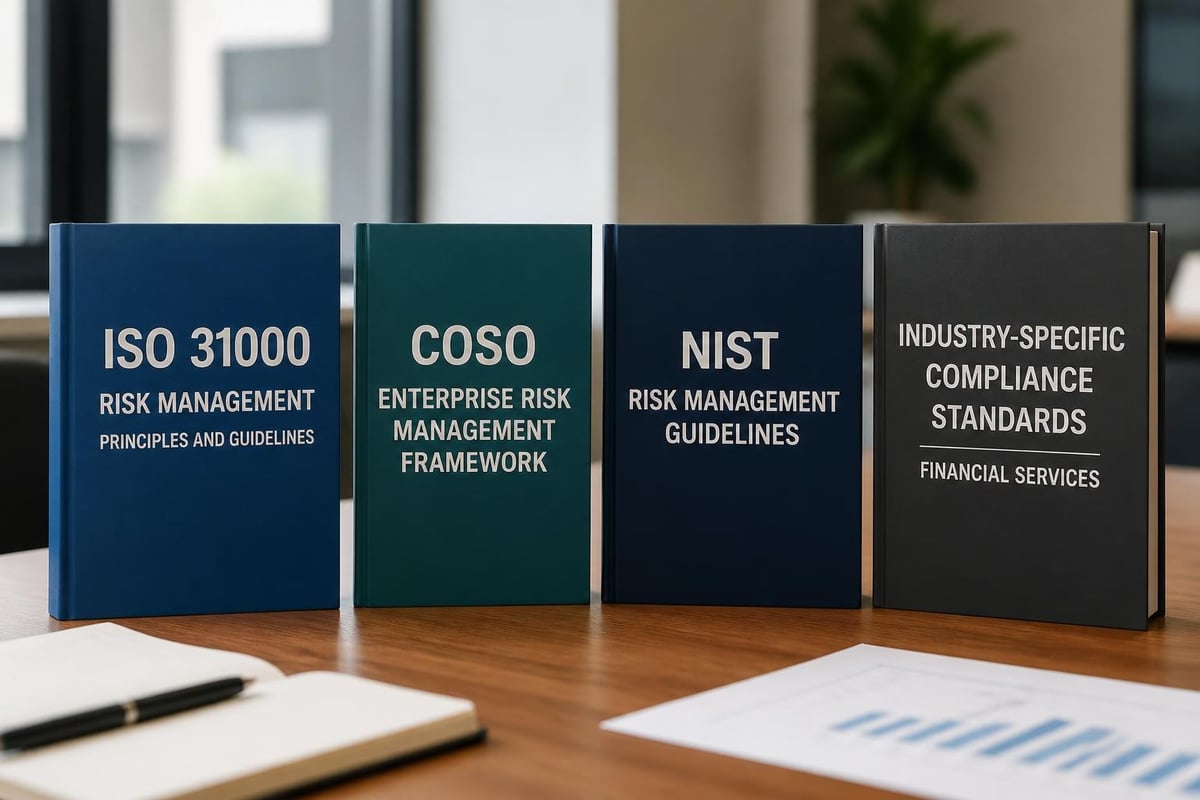
Industry-Standard Frameworks
The International Organization for Standardization’s approach to risk management has influenced countless organizations worldwide. ISO 31000 provides principles and guidelines applicable across sectors, while ISO 27001 focuses specifically on information security management systems.
COSO Enterprise Risk Management framework offers an integrated approach that connects risk management to organizational strategy and performance. This framework emphasizes the importance of risk culture, governance structures, and risk-informed decision making throughout the enterprise.
For compliance-focused organizations, particularly in financial services, tailored frameworks address specific regulatory requirements. These specialized approaches account for industry-unique challenges while incorporating broader risk management principles.
Implementation Strategies
Implementing a risk management framework requires careful planning and organizational commitment. Successful risk management professionals follow a structured approach:
- Establish governance structures that define roles, responsibilities, and reporting relationships
- Develop risk appetite statements that articulate how much risk the organization is willing to accept
- Create risk registers documenting identified threats, their assessments, and mitigation plans
- Design control measures appropriate to each risk's nature and severity
- Implement monitoring systems to track risk indicators and control effectiveness
- Build feedback loops ensuring continuous improvement of the risk management program
The framework selected must align with organizational culture and operational realities. A risk management professional adapts standard methodologies to fit their specific context rather than forcing square-peg solutions into round holes.
Emerging Risk Domains in 2026
The risk landscape continues to evolve rapidly, presenting new challenges that demand specialized knowledge and innovative approaches.
Cybersecurity and Digital Transformation
Digital risks have expanded exponentially as organizations accelerate technology adoption. Research on how risk management shapes cybersecurity competency reveals that structural sources of organizational failures often stem from inadequate risk reasoning in professional training and practice.
A risk management professional must now understand:
- Cloud security implications and shared responsibility models
- Ransomware threats and business continuity planning
- Third-party vendor vulnerabilities in interconnected ecosystems
- Data privacy regulations across multiple jurisdictions
- Artificial intelligence risks and algorithmic bias
Financial services firms face particular scrutiny regarding data protection. Client information represents both a valuable asset and a significant liability. Breaches can result in substantial fines, legal action, and irreparable reputational damage.
Artificial Intelligence and Automation Risks
The proliferation of AI systems introduces novel risk categories. A comprehensive catalog of risk sources and management measures for AI systems supports global efforts in regulating and standardizing AI safety practices.
Risk management professionals must evaluate:
| AI Risk Type | Key Considerations | Mitigation Approaches |
|---|---|---|
| Bias and Fairness | Discriminatory outcomes, regulatory compliance | Testing protocols, diverse training data |
| Explainability | Black-box decision making, audit requirements | Interpretable models, documentation standards |
| Security | Adversarial attacks, data poisoning | Robust validation, monitoring systems |
| Accountability | Liability determination, governance gaps | Clear ownership structures, human oversight |
Regulatory Complexity and Compliance Burden
Regulatory environments grow more complex annually, particularly for financial service providers. A risk management professional must monitor changes across multiple jurisdictions and understand their cumulative impact on operations.
The challenge extends beyond mere compliance. Organizations must balance regulatory requirements with business efficiency and customer experience. Overreaching controls can stifle innovation and create operational bottlenecks, while insufficient measures expose the company to penalties and losses.
Career Pathways and Professional Development
The journey to becoming a seasoned risk management professional typically follows several common trajectories, though individual paths vary considerably.
Entry Points and Early Career
Many professionals enter the field through related disciplines including accounting, finance, audit, or compliance. Entry-level positions might include:
- Risk analyst roles supporting senior risk managers
- Compliance coordinator positions in regulated industries
- Internal audit staff exposed to enterprise-wide risk assessments
- Insurance underwriters developing risk evaluation expertise
Educational backgrounds vary widely. While business, finance, and accounting degrees are common, professionals also come from engineering, law, and technology backgrounds. This diversity strengthens the field by bringing multiple perspectives to complex problems.
Mid-Career Advancement
As professionals gain experience, they typically assume greater responsibility for risk program design and implementation. Mid-career positions include risk managers overseeing specific domains (operational risk, compliance risk, financial risk) or serving generalist roles in smaller organizations.
Professional development during this phase involves:
- Pursuing advanced certifications like those offered through The Institute of Risk Management
- Developing specialized expertise in high-demand areas
- Building leadership and change management capabilities
- Expanding professional networks through industry associations
- Contributing to thought leadership through publications or presentations
Senior Leadership Roles
Experienced risk management professionals may advance to Chief Risk Officer positions or equivalent executive roles. These positions involve:
- Setting enterprise-wide risk strategy aligned with business objectives
- Reporting directly to boards and executive committees
- Overseeing risk management teams across multiple domains
- Influencing organizational culture regarding risk awareness
- Representing the organization with regulators and external stakeholders
The transition to senior leadership requires shifting focus from technical execution to strategic guidance and organizational influence.

Building Effective Risk Management Programs
Creating a robust risk management program requires more than technical expertise. A risk management professional must also navigate organizational dynamics, secure stakeholder buy-in, and demonstrate value to justify continued investment.
Stakeholder Engagement
Successful programs begin with comprehensive stakeholder engagement. Risk managers must understand the concerns, priorities, and constraints of different organizational constituencies:
- Executive leadership focuses on strategic risks and competitive positioning
- Operational managers prioritize efficiency and resource allocation
- Compliance teams emphasize regulatory adherence and audit readiness
- IT departments concentrate on system security and business continuity
- Finance groups evaluate risk through a cost-benefit lens
Building relationships across these groups enables the risk management professional to gather better information, implement more effective controls, and demonstrate program value in terms each stakeholder understands.
Technology Integration
Modern risk management increasingly depends on technology platforms that automate data collection, enable real-time monitoring, and facilitate reporting. Resources like IRMI’s comprehensive tools for risk management professionals provide valuable support for understanding and implementing these solutions.
Key technology considerations include:
- Integration with existing business systems to avoid data silos
- User-friendly interfaces encouraging adoption across the organization
- Scalability to accommodate growth and changing requirements
- Robust security protecting sensitive risk information
- Analytics capabilities supporting predictive risk modeling
Technology should enhance rather than replace professional judgment. The most sophisticated platform cannot substitute for the contextual understanding and strategic thinking a skilled risk management professional brings to their work.
Measuring Program Effectiveness
Demonstrating value remains a persistent challenge. Unlike revenue-generating functions, risk management's success often manifests as the absence of problems rather than positive outcomes. Effective measurement approaches include:
| Metric Category | Example Indicators | Data Sources |
|---|---|---|
| Leading Indicators | Training completion rates, control testing results | Learning management systems, audit logs |
| Lagging Indicators | Incident frequency, regulatory findings | Incident reports, examination results |
| Efficiency Metrics | Time to resolve issues, cost per assessment | Project management tools, financial systems |
| Maturity Assessments | Framework implementation level, culture surveys | Self-assessments, third-party reviews |
A balanced scorecard approach provides the most comprehensive view of program performance, combining quantitative metrics with qualitative assessments.
The Evolving Role in 2026 and Beyond
The profession continues to transform in response to technological advancement, regulatory evolution, and changing organizational expectations. Research examining how software developers perceive and assess risks offers insights applicable across professions regarding risk perception factors and calibration needs.
From Gatekeeper to Strategic Enabler
The traditional view of risk management as primarily defensive is giving way to a more balanced perspective. Modern risk management professionals increasingly serve as strategic enablers who help organizations pursue opportunities safely rather than simply preventing problems.
This evolution requires:
- Understanding business strategy and competitive dynamics
- Evaluating risks in context of potential rewards
- Designing controls that protect without constraining unnecessarily
- Communicating trade-offs clearly to decision makers
- Building organizational resilience and adaptive capacity
Cross-Functional Integration
Siloed risk management functions are becoming obsolete. The most effective risk management professionals work collaboratively across organizational boundaries, integrating risk considerations into strategic planning, product development, and operational processes.
This integration creates challenges around role clarity and accountability but ultimately strengthens organizational risk culture. When risk thinking permeates decision making at all levels, organizations become more resilient and better positioned to navigate uncertainty.
Continuous Learning Requirements
The rapid pace of change in business, technology, and regulation demands continuous learning. A risk management professional cannot afford to become complacent with existing knowledge. Successful practitioners commit to:
- Regular professional development through courses and conferences
- Reading industry publications and research
- Participating in professional associations and peer networks
- Experimenting with new tools and methodologies
- Seeking feedback and reflecting on their practice
This commitment to growth distinguishes exceptional risk management professionals from those who merely maintain minimum competency levels.
The role of a risk management professional has evolved from a specialized technical function to a strategic imperative for organizations navigating complex regulatory, technological, and operational landscapes in 2026. Success in this field requires combining technical expertise with communication skills, regulatory knowledge with business acumen, and analytical rigor with strategic thinking. For financial service providers and compliance-intensive organizations seeking to build robust risk management capabilities, partnering with experienced specialists can accelerate program development while ensuring regulatory adherence. Holistic Compliance Management Solutions offers tailored compliance management and risk services designed specifically for modern organizations facing evolving regulatory requirements, helping you build sustainable operations while managing complexity effectively.