
GRC Consultant: Essential Guide for Modern Businesses
Organizations today face an increasingly complex regulatory landscape where governance, risk, and compliance (GRC) have evolved from back-office functions into strategic imperatives. A GRC consultant serves as a critical partner in navigating this complexity, helping businesses transform compliance obligations into competitive advantages. These specialized professionals bring expertise in aligning organizational processes with regulatory requirements while building resilient frameworks that support sustainable growth. For Financial Service Providers and modern enterprises operating in South Africa's evolving regulatory environment, engaging a qualified GRC consultant has become essential for maintaining operational excellence and mitigating business risks.
Understanding the GRC Consultant Role
A GRC consultant operates at the intersection of business strategy and regulatory compliance, providing specialized guidance that extends far beyond simple checklist adherence. These professionals analyze organizational structures, identify risk exposures, and design integrated systems that streamline compliance activities while supporting broader business objectives.
Core Responsibilities and Expertise
The modern GRC consultant delivers value through several interconnected responsibilities. They conduct comprehensive risk assessments to identify vulnerabilities across operational, financial, and reputational dimensions. They design and implement governance frameworks that define clear accountability structures and decision-making protocols. They develop compliance programs tailored to industry-specific regulations, including financial services requirements like FICA and POPI.
Key competencies include:
- Regulatory interpretation and application across multiple jurisdictions
- Risk modeling and quantitative analysis methodologies
- Policy development and procedural documentation
- Technology assessment and GRC platform implementation
- Stakeholder communication and executive reporting
- Audit coordination and remediation planning
A qualified GRC consultant brings both technical knowledge and practical experience. They understand how regulations translate into operational requirements and can bridge the gap between legal mandates and business realities.

Industry Specialization Matters
While foundational GRC principles remain consistent, effective consultants develop deep expertise in specific sectors. Financial services, healthcare, manufacturing, and technology industries each face unique regulatory challenges requiring specialized knowledge.
For Financial Service Providers, a GRC consultant must understand sector-specific legislation including conduct standards, anti-money laundering requirements, and data protection obligations. This specialization enables consultants to provide targeted guidance rather than generic recommendations. They stay current with regulatory updates from authorities like the Financial Sector Conduct Authority and interpret how changes impact day-to-day operations.
Industry-specific expertise also accelerates implementation timelines. A consultant familiar with FSP licensing requirements can streamline the application process, while one experienced in insurance brokerage understands the nuances of managing client data under privacy regulations.
Strategic Value a GRC Consultant Delivers
Organizations that view compliance as merely a cost center miss significant opportunities for value creation. A skilled GRC consultant reframes these obligations as strategic enablers that drive operational excellence and competitive differentiation.
Transforming Compliance into Business Advantage
According to research on GRC maturity trends, leading organizations increasingly recognize GRC as a driver of operational excellence rather than a regulatory burden. This shift reflects a fundamental understanding that well-designed compliance programs create efficiencies, reduce waste, and improve decision-making quality.
A GRC consultant facilitates this transformation by identifying processes where compliance requirements align with operational improvements. For example, data governance protocols required for POPI compliance often reveal opportunities to enhance data quality, improve customer insights, and streamline reporting capabilities.
| Traditional Compliance View | Strategic GRC Approach |
|---|---|
| Cost center requiring resources | Investment generating operational returns |
| Separate from business operations | Integrated into strategic planning |
| Reactive response to regulations | Proactive risk management |
| Compliance-focused metrics only | Business performance indicators included |
The consultant role includes educating leadership teams on these strategic dimensions, building internal capability, and demonstrating tangible returns from GRC investments.
Risk Mitigation and Resilience Building
Beyond compliance checkboxes, a GRC consultant strengthens organizational resilience by developing comprehensive risk management frameworks. They help businesses anticipate potential disruptions, assess impact scenarios, and establish response protocols that minimize operational disruption.
This proactive approach proves particularly valuable in uncertain environments. According to 2025 GRC practitioner survey data, cyber risk, operational resilience, and regulatory compliance rank as top priorities for GRC professionals, reflecting the interconnected nature of modern business risks.
A consultant structures risk management programs that address these priorities holistically. They implement controls that protect against cyber threats while ensuring business continuity, develop incident response plans that coordinate cross-functional teams, and establish monitoring systems that provide early warning of emerging risks.
Implementation Process and Methodologies
Engaging a GRC consultant involves a structured approach that moves from assessment through design to implementation and ongoing optimization. Understanding this process helps organizations set appropriate expectations and maximize consultant effectiveness.
Initial Assessment and Gap Analysis
Every engagement begins with comprehensive assessment. The GRC consultant evaluates current governance structures, reviews existing policies and procedures, interviews key stakeholders, and benchmarks practices against regulatory requirements and industry standards.
The assessment phase typically includes:
- Documentation review of policies, procedures, and organizational charts
- Stakeholder interviews with executives, compliance officers, and operational managers
- Process observation to understand actual versus documented workflows
- Technology assessment of existing GRC tools and systems
- Regulatory mapping to identify applicable requirements
- Gap analysis highlighting areas requiring attention
This diagnostic work establishes the baseline and informs prioritization decisions. A skilled consultant distinguishes between critical gaps requiring immediate remediation and opportunities for incremental improvement over time.

Framework Design and Customization
Following assessment, the GRC consultant designs tailored frameworks aligned with organizational context. They resist one-size-fits-all templates, recognizing that effective GRC programs reflect business model specifics, risk appetite, resource constraints, and cultural factors.
Framework design addresses several components simultaneously. Governance structures define roles, responsibilities, and reporting relationships. Risk management methodologies establish how risks are identified, assessed, prioritized, and monitored. Compliance programs outline specific requirements, control activities, testing protocols, and documentation standards.
The consultant also designs integration mechanisms that prevent GRC activities from becoming siloed. They create shared taxonomies, coordinated reporting schedules, and technology platforms that consolidate information across functions.
Technology Selection and Implementation
Modern GRC programs rely heavily on technology platforms that automate routine tasks, centralize documentation, and provide real-time visibility into risk and compliance status. A GRC consultant guides technology selection, ensuring chosen solutions align with organizational needs and integration requirements.
Market analysis indicates significant growth in GRC platforms driven by regulatory compliance needs and technological advancements including artificial intelligence capabilities. Consultants help organizations navigate this expanding market by defining requirements, evaluating vendors, and managing implementation projects.
Technology implementation extends beyond software installation. The consultant configures systems to reflect organizational workflows, migrates historical data, trains users, and establishes ongoing administration protocols.
Current Trends Shaping GRC Consulting
The GRC consulting landscape continues evolving in response to technological advancements, regulatory changes, and shifting business priorities. Understanding these trends helps organizations select consultants positioned to deliver forward-looking guidance.
Artificial Intelligence and Automation
Artificial intelligence is transforming how organizations approach GRC activities, and consultants increasingly incorporate AI-powered solutions into their recommendations. Machine learning algorithms can analyze vast datasets to identify anomalies, predict risk events, and automate compliance monitoring tasks that previously required manual effort.
A GRC consultant helps organizations understand where AI delivers genuine value versus hype. They assess use cases like automated policy monitoring, intelligent risk scoring, natural language processing for regulatory analysis, and predictive analytics for forecasting compliance costs.
Practical AI applications in GRC include:
- Automated control testing and exception reporting
- Continuous monitoring of transaction patterns for compliance violations
- Natural language processing to track regulatory updates
- Predictive models for emerging risk identification
- Intelligent workflow routing for approval processes
The consultant role includes evaluating AI vendor claims, piloting technologies in controlled environments, and ensuring human oversight remains appropriate for critical decisions.
Integrated Risk Management
Traditional approaches treated different risk types in isolation, with separate teams managing operational risk, financial risk, compliance risk, and strategic risk. Current trends emphasize integration, recognizing that risks interact and compound across categories.
According to insights on building resilient GRC programs, organizations benefit from viewing GRC as a strategic enabler supporting business goals and resilience. A GRC consultant facilitates this integrated perspective by implementing enterprise risk management frameworks that provide consolidated visibility.
Integration requires common risk language, unified assessment methodologies, and coordinated reporting structures. The consultant breaks down organizational silos, establishes cross-functional governance committees, and implements technology platforms that aggregate risk data from multiple sources.
Regulatory Complexity and Global Coordination
Organizations operating across multiple jurisdictions face increasing regulatory complexity as authorities worldwide introduce new requirements. Financial service providers must navigate local regulations while managing international standards, creating compliance challenges that demand sophisticated coordination.
A GRC consultant provides critical guidance by mapping regulatory obligations across jurisdictions, identifying overlapping requirements where single controls satisfy multiple regulations, and establishing monitoring systems that track regulatory changes. They help organizations anticipate how proposed legislation might impact operations and develop adaptive frameworks that accommodate regulatory evolution.
For businesses like insurance brokers navigating FICA requirements while expanding services, specialized support through programs such as Compliance practice assistance offers targeted guidance on drafting Risk Management and Compliance Programs and implementing training initiatives.
Measuring GRC Consultant Effectiveness
Organizations investing in GRC consulting services require clear metrics demonstrating value delivered. Effective measurement frameworks assess both compliance outcomes and broader business impacts.
Compliance and Performance Metrics
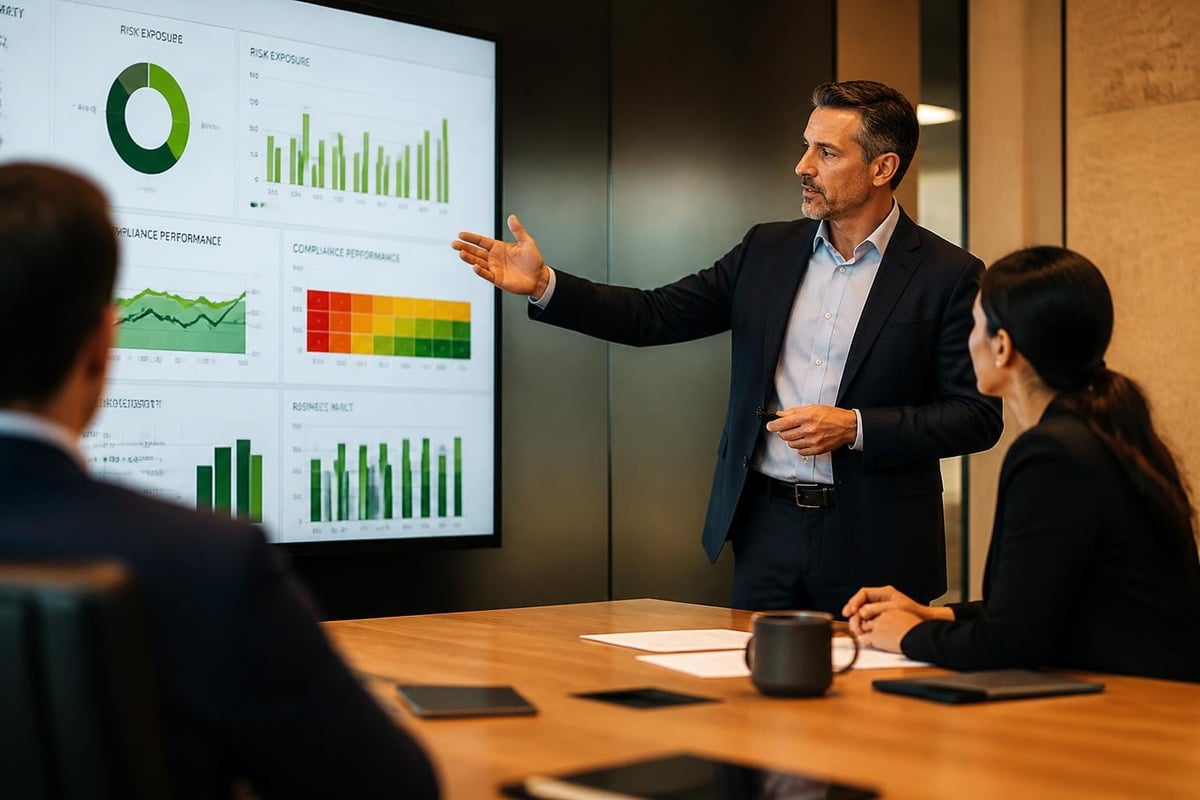
Quantifiable metrics provide objective evidence of program effectiveness. A GRC consultant establishes measurement frameworks that track key performance indicators across governance, risk, and compliance dimensions.
| Metric Category | Example Indicators | Measurement Frequency |
|---|---|---|
| Compliance Status | Percentage of controls tested, remediation timelines, audit findings | Monthly/Quarterly |
| Risk Exposure | Number of open risks, average risk score, incidents reported | Real-time/Monthly |
| Efficiency Gains | Hours saved through automation, cost per compliance activity | Quarterly/Annually |
| Governance Maturity | Policy coverage percentage, training completion rates | Quarterly |
| Business Impact | Revenue protected, opportunities enabled, reputation metrics | Annually |
These metrics should align with organizational priorities and provide actionable insights. A consultant helps leadership teams interpret data, identify trends requiring attention, and communicate results to stakeholders including boards and regulators.
Return on Investment Considerations
While some GRC benefits resist precise quantification, organizations need frameworks for evaluating consulting investments. A GRC consultant helps articulate both tangible and intangible returns.
Tangible returns include reduced audit fees, lower insurance premiums, avoided regulatory penalties, and operational efficiencies from streamlined processes. Intangible benefits encompass enhanced reputation, improved stakeholder confidence, better decision-making capabilities, and competitive advantages from compliance readiness.
Consultants should provide realistic projections during engagement planning and track actual results against forecasts. This accountability demonstrates value and builds long-term client relationships based on measurable outcomes.
Selecting the Right GRC Consultant
Choosing an appropriate GRC consultant significantly impacts program success. Organizations should evaluate candidates across multiple dimensions beyond basic qualifications and pricing considerations.
Essential Qualifications and Experience
Technical credentials provide baseline assurance of consultant competency. Look for relevant certifications including Certified in Risk and Information Systems Control (CRISC), Certified Information Systems Auditor (CISA), or Certified Regulatory Compliance Manager (CRCM). Industry-specific credentials like Certified Financial Services Auditor demonstrate sector expertise.
Professional experience matters equally. Assess candidate backgrounds for relevant industry exposure, technology platform knowledge, and project complexity handled. A consultant who has guided organizations through similar challenges brings practical wisdom that accelerates results.
Reference checks reveal consultant effectiveness. Speak with previous clients about communication quality, deliverable timeliness, knowledge transfer effectiveness, and lasting impact after engagement completion.
Cultural Fit and Collaboration Style
Technical expertise alone doesn't guarantee success. The consultant must work effectively within organizational culture, building relationships with stakeholders and fostering collaboration across functions.
During selection processes, assess communication style, listening capability, and adaptability. The best GRC consultants balance subject matter expertise with humility, recognizing that internal teams possess critical contextual knowledge. They facilitate rather than dictate, building internal capability while delivering immediate value.
Evaluation criteria should include:
- Demonstrated understanding of business model and competitive dynamics
- Ability to communicate technical concepts to non-specialist audiences
- Flexibility in adjusting approaches based on organizational feedback
- Commitment to knowledge transfer and capability building
- Track record of collaborative stakeholder engagement
Request proposals that outline engagement approaches, not just credentials and fees. The methodology description reveals how consultants think about problems and structure solutions.
Building Long-Term GRC Capability
While external consultants provide valuable expertise, sustainable GRC programs require internal capability development. The most effective consultants view their role as building organizational competency rather than creating dependency.
Knowledge Transfer and Training
A quality GRC consultant prioritizes knowledge transfer throughout engagements. They document decision rationale, explain methodological choices, and involve internal teams in analysis and design activities. This collaborative approach ensures staff understand not just what controls are required, but why specific approaches were selected.
Formal training programs complement on-the-job learning. Consultants develop customized curricula addressing organizational needs, delivering workshops on topics like risk assessment techniques, control design principles, and regulatory interpretation. They create reference materials, templates, and tools that staff can apply independently after engagement completion.
According to GRC challenges and priorities research, professionals face evolving challenges requiring continuous learning. Consultants help organizations establish ongoing education programs that keep pace with regulatory changes and emerging practices.
Establishing Governance and Oversight
Sustainable GRC programs require clear governance structures that survive consultant departure. A GRC consultant helps establish committees, define roles and responsibilities, and create reporting protocols that provide ongoing oversight.
These structures typically include a GRC steering committee with cross-functional representation, risk champions embedded within business units, and specialized working groups addressing specific domains like cyber risk or third-party management. The consultant facilitates initial meetings, establishes operating rhythms, and transfers chairperson responsibilities to internal leaders.
Documentation supports continuity. Policies, procedures, charters, and guidelines created during consulting engagements provide reference frameworks for staff navigating future scenarios. Regular review cycles ensure these materials remain current as regulations and business conditions evolve.
Future Outlook for GRC Consulting
The GRC consulting profession continues evolving in response to technological advancement, regulatory expansion, and changing business models. Understanding emerging directions helps organizations anticipate future needs and select consultants positioned for long-term partnership.
Emerging Specializations
As GRC domains become more complex, consultants increasingly specialize in niche areas. Cyber governance, environmental social and governance (ESG) compliance, third-party risk management, and data privacy represent growing specializations requiring dedicated expertise.
These emerging areas often blend traditional GRC disciplines with new domains. For example, ESG compliance combines governance frameworks, risk assessment methodologies, and regulatory reporting requirements with sustainability metrics and stakeholder engagement. A GRC consultant with ESG specialization helps organizations navigate this complexity while integrating sustainability commitments into existing compliance programs.
Financial service providers face particularly dynamic specialization needs as regulations evolve. Consultants must stay current with conduct standards, market abuse prevention, algorithmic trading governance, and digital asset compliance as these areas mature.
Technology-Enabled Service Models
Consulting delivery models are transforming as technology enables new service approaches. Traditional project-based engagements are supplemented by continuous advisory relationships supported by digital platforms, remote monitoring capabilities, and automated reporting tools.
Some consultants offer managed GRC services where they assume ongoing responsibility for specific compliance activities, leveraging technology to deliver services efficiently at scale. Others provide subscription-based advisory access, giving clients on-demand expertise without full engagement commitments.
These evolving models provide flexibility for organizations at different maturity stages. Startups might begin with managed services, transitioning to advisory-only relationships as internal capability develops. Established organizations might engage consultants for specialized needs while maintaining core GRC activities internally.
Navigating the complex intersection of governance, risk, and compliance requires specialized expertise that transforms regulatory obligations into strategic advantages. Whether you're establishing initial compliance frameworks, responding to regulatory changes, or optimizing existing programs, partnering with experienced professionals accelerates results while building sustainable capability. Holistic Compliance Management Solutions delivers tailored compliance management services designed specifically for Financial Service Providers and modern organizations operating in South Africa's evolving regulatory landscape, providing the unbiased expertise and practical guidance needed to achieve compliance excellence while supporting long-term business growth.