
Risk Management Training Online: Complete Guide for 2026
Organizations today face unprecedented complexity in managing operational, financial, regulatory, and strategic risks. The shift toward digital transformation has made risk management training online not just convenient, but essential for building capable teams that can navigate regulatory requirements and protect organizational assets. Whether you're overseeing compliance for financial service providers or managing enterprise-wide risk programs, accessible online training solutions provide the flexibility and depth needed to develop expertise while maintaining business continuity.
Understanding Modern Risk Management Training Needs
The landscape of organizational risk has expanded dramatically over the past five years. Regulatory frameworks continue to evolve, cyber threats grow more sophisticated, and stakeholder expectations for transparency and accountability have never been higher. Traditional classroom-based training no longer meets the demands of distributed teams, rapid regulatory changes, or the need for just-in-time learning.
Risk management training online addresses these challenges through flexible delivery models that allow professionals to develop competencies at their own pace. For compliance officers, risk managers, and executives responsible for organizational resilience, digital learning platforms offer structured pathways to master everything from fundamental risk concepts to advanced enterprise risk management frameworks.
Key Components of Effective Online Risk Programs
Comprehensive risk management training online should cover multiple dimensions of organizational risk:
- Operational risk management including process failures, human error, and system breakdowns
- Financial risk assessment covering credit risk, market risk, and liquidity management
- Regulatory compliance addressing industry-specific requirements and frameworks
- Strategic risk planning for merger activities, market expansion, and business model shifts
- Cyber security risk including data protection and information security protocols
- Reputational risk mitigation strategies for brand protection and stakeholder communication
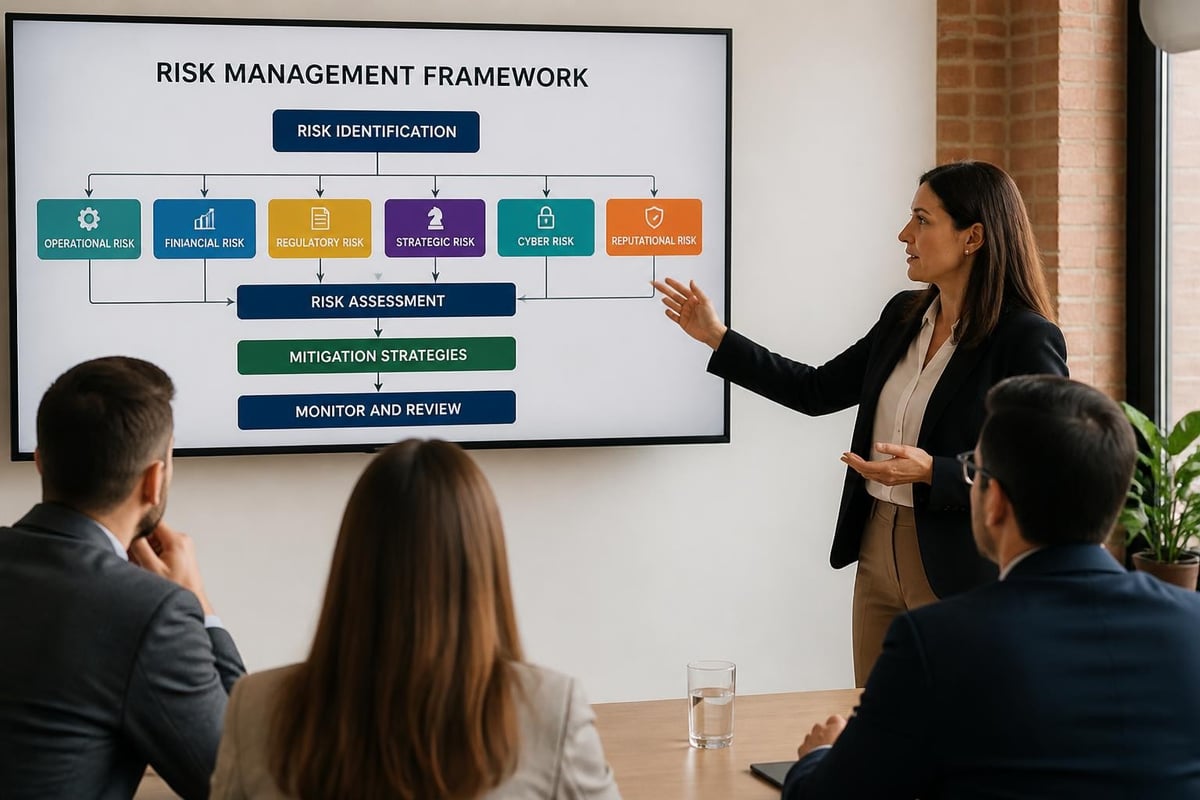
The most effective programs integrate theoretical frameworks with practical application. Learners benefit from case studies drawn from real-world scenarios, interactive assessments that test decision-making capabilities, and tools they can immediately implement within their organizations.
Accreditation and Certification Standards
Professional certifications provide credible validation of risk management expertise. Several internationally recognized bodies offer online pathways to certification, each with distinct focus areas and requirements.
| Certification | Focus Area | Typical Duration | Best For |
|---|---|---|---|
| ARM (Associate in Risk Management) | Insurance and organizational risk | 12-18 months | Insurance professionals and risk managers |
| FRM (Financial Risk Manager) | Financial markets and credit risk | 6-12 months | Banking and investment professionals |
| CPRM (Certified Professional Risk Manager) | Enterprise risk management | 8-12 months | Senior risk officers and executives |
| CRISC (Certified in Risk and Information Systems Control) | IT and cyber risk | 6-9 months | Technology and information security teams |
Organizations seeking to build internal capabilities should consider which certifications align with their risk profile and regulatory obligations. Financial service providers, for instance, typically prioritize certifications that demonstrate competency in regulatory compliance and financial risk assessment.
The Risk and Insurance Management Society provides a range of online learning options that support both certification preparation and continuing professional development. Their platform offers structured courses alongside on-demand resources that allow professionals to customize their learning journey.
Industry-Specific Training Pathways
Different sectors face unique risk landscapes that require specialized knowledge:
Financial services organizations must navigate complex regulatory frameworks including anti-money laundering requirements, customer due diligence obligations, and ongoing compliance monitoring. Risk management training online for this sector emphasizes regulatory interpretation, control implementation, and audit readiness. For insurance brokers and financial advisors, programs addressing compliance practice requirements prove particularly valuable. Tools like Fica RMCP assist with specialized compliance needs including FICA and POPI training while offering affordable solutions for risk and compliance program documentation.
Healthcare providers focus on patient safety, clinical risk, and privacy protection under frameworks like HIPAA. The American Society for Health Care Risk Management offers an online learning library specifically designed for health care risk professionals seeking to advance their expertise in these critical areas.
Banking institutions require deep expertise in credit risk, market risk, and operational risk management. The American Bankers Association offers online courses that address these specialized needs with content tailored for banking professionals.
Implementing International Risk Frameworks
Risk management training online increasingly emphasizes internationally recognized frameworks that provide consistent methodologies across organizations and jurisdictions. ISO 31000 stands as the preeminent international standard for risk management, offering principles and guidelines applicable across all industries and organization types.
The ISO 31000 framework establishes a structured approach to risk management that includes:
- Establishing context by defining internal and external parameters
- Risk assessment through identification, analysis, and evaluation
- Risk treatment selecting and implementing appropriate responses
- Monitoring and review ensuring controls remain effective
- Communication and consultation with stakeholders throughout the process
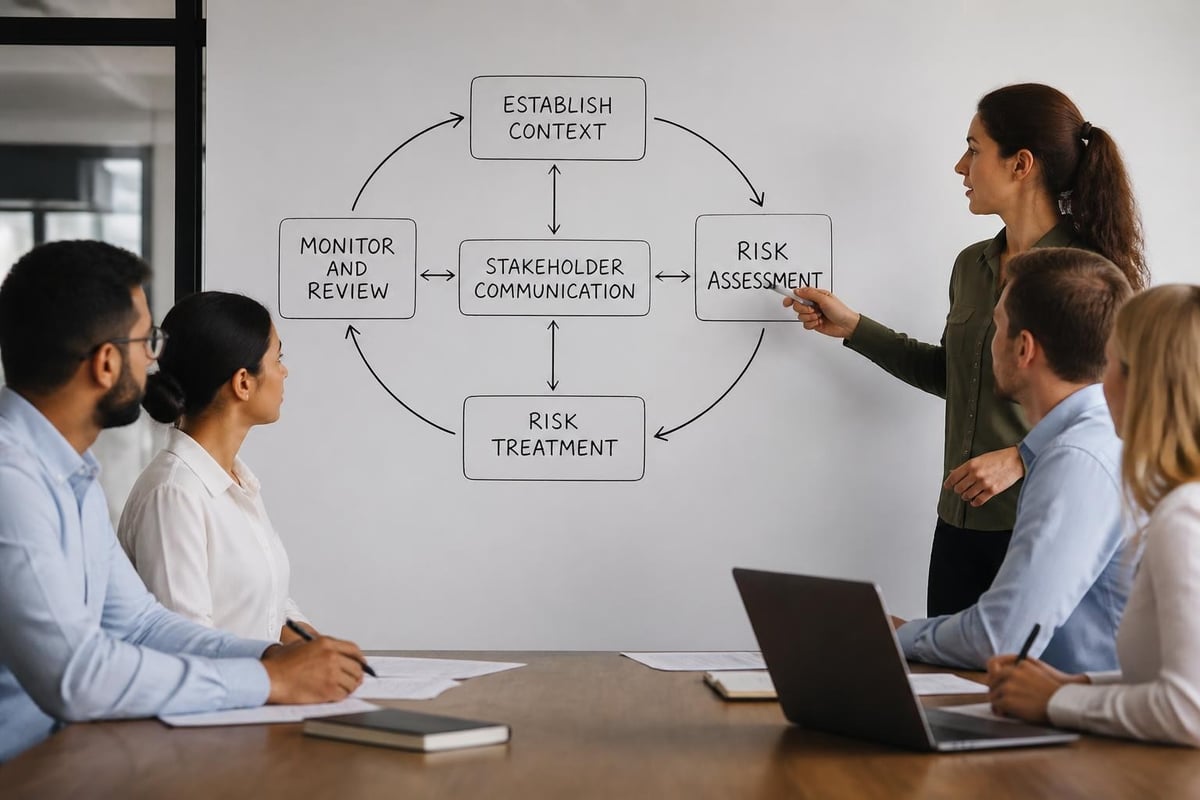
Organizations implementing ISO 31000 through risk management training online gain several advantages. The standardized approach facilitates communication across departments and with external stakeholders. It provides a foundation for integrating risk management into strategic planning and operational processes. Perhaps most importantly, it creates a common language for discussing risk across organizational boundaries.
Enterprise Risk Management Integration
Enterprise Risk Management (ERM) represents a holistic approach that considers risks across all organizational levels and functions. Rather than managing risks in silos, ERM programs integrate risk considerations into strategic decision-making and operational planning.
Risk management training online focused on ERM teaches professionals to:
- Map risks across organizational units and processes
- Assess interdependencies between different risk categories
- Align risk appetite with strategic objectives
- Develop integrated reporting frameworks for board and executive oversight
- Create risk-aware cultures that embed risk consideration into daily operations
The transition from siloed risk management to integrated ERM requires both technical knowledge and change management capabilities. Online training programs that combine these elements provide the most value for organizations undertaking this transformation.
Digital Learning Technologies and Methodologies
The effectiveness of risk management training online depends heavily on instructional design and technology deployment. Modern learning platforms employ various approaches to enhance engagement and knowledge retention:
Microlearning modules break complex risk concepts into digestible segments that professionals can complete in 10-15 minute sessions. This approach suits busy compliance officers and risk managers who must balance training with operational responsibilities.
Scenario-based learning presents realistic situations requiring learners to apply risk assessment and decision-making skills. These interactive exercises build practical competencies that translate directly to workplace performance.
Virtual simulations create immersive environments where participants experience the consequences of risk management decisions without real-world stakes. Financial services firms use simulations to train teams on market stress scenarios, operational disruptions, and regulatory compliance challenges.
| Learning Method | Engagement Level | Retention Rate | Best Use Case |
|---|---|---|---|
| Video lectures | Medium | 20-30% | Foundational concepts and frameworks |
| Interactive assessments | High | 50-60% | Testing comprehension and decision-making |
| Scenario simulations | Very High | 70-80% | Practical application and skill development |
| Peer discussion forums | Medium-High | 40-50% | Knowledge sharing and problem-solving |
The most sophisticated risk management training online combines multiple methodologies within comprehensive programs. Learners begin with video content introducing concepts, progress through interactive assessments testing comprehension, and complete with scenario-based exercises requiring practical application.
Mobile Learning and Accessibility
Mobile-optimized platforms extend the reach of risk management training online beyond desktop environments. Professionals can access learning content during commutes, between meetings, or while traveling for business. This flexibility proves especially valuable for organizations with distributed teams or field-based personnel.
Accessibility features ensure training reaches all learners regardless of physical capabilities. Closed captioning, screen reader compatibility, and adjustable text sizes represent baseline requirements for inclusive digital learning environments. Organizations committed to diversity and inclusion prioritize vendors whose platforms meet WCAG 2.1 accessibility standards.
Building Internal Risk Management Capabilities
Organizations that invest systematically in risk management training online develop competitive advantages through enhanced resilience and decision-making quality. Building internal capabilities requires strategic planning beyond simply enrolling staff in courses.
Competency Mapping and Skills Assessment
Effective capability building begins with understanding current competencies and identifying gaps:
- Inventory existing skills across the risk management function and related roles
- Define target competencies aligned with organizational risk profile and strategic objectives
- Assess individual and team capabilities against target competencies
- Develop personalized learning paths addressing identified gaps
- Measure progress through assessments and practical application evaluations
This structured approach ensures training investments deliver measurable improvements in organizational risk management effectiveness. Rather than generic enrollment in available courses, teams receive targeted development aligned with actual needs.

Creating Learning Cultures
Sustainable capability development requires organizational cultures that value continuous learning and knowledge sharing. Leaders who participate in risk management training online alongside their teams demonstrate commitment and create permission for others to prioritize professional development.
Communities of practice extend formal training by providing forums where risk professionals share experiences, discuss emerging challenges, and collaboratively solve problems. Online platforms facilitate these communities across geographic boundaries, connecting practitioners who might otherwise work in isolation.
Documentation and knowledge management systems capture insights generated through training programs. When risk professionals apply new frameworks or tools, documenting outcomes and lessons learned creates organizational knowledge that benefits future initiatives.
Measuring Training Effectiveness and ROI
Organizations investing in risk management training online rightfully expect measurable returns. Effective evaluation extends beyond completion rates and test scores to assess behavioral change and organizational impact.
Kirkpatrick's Four Levels of Evaluation provides a framework for comprehensive assessment:
- Level 1 – Reaction: Do participants find the training relevant and engaging?
- Level 2 – Learning: Have participants acquired intended knowledge and skills?
- Level 3 – Behavior: Are participants applying learning in their work?
- Level 4 – Results: Has training improved organizational outcomes?
Most risk management training online readily measures the first two levels through participant surveys and knowledge assessments. The greater challenge lies in evaluating behavioral change and organizational results.
Performance Indicators for Risk Training
Observable indicators that training is improving organizational risk management include:
- Reduction in compliance violations or regulatory findings
- Improved risk identification during project planning and strategic initiatives
- Enhanced quality of risk assessments and mitigation plans
- Faster response times when addressing emerging risks
- Increased employee confidence in handling risk-related situations
- Better integration of risk considerations into decision-making processes
Financial metrics provide additional validation. Organizations may track avoided losses, reduced insurance premiums due to improved risk controls, or decreased costs associated with compliance failures. While attributing these outcomes solely to training requires careful analysis, directional improvements following comprehensive training initiatives suggest positive impact.
Selecting Risk Management Training Providers
The expanding market for risk management training online presents organizations with numerous options. Selecting providers requires evaluation across multiple dimensions to ensure alignment with organizational needs and quality standards.
Evaluation Criteria for Training Programs
Consider these factors when assessing potential training providers:
Content quality and currency – Does the program reflect current risk management best practices, regulatory requirements, and emerging threats? Content should be updated regularly to maintain relevance.
Instructor expertise – What credentials and practical experience do instructors bring? The most valuable programs feature practitioners who combine academic knowledge with real-world application.
Learning platform functionality – Does the technology support effective learning through intuitive navigation, reliable performance, and robust features? Poor platform experiences undermine even high-quality content.
Accreditation and recognition – Is the training recognized by professional bodies or regulatory authorities? Accredited programs provide greater assurance of quality and may satisfy continuing education requirements.
Support services – What assistance is available to learners encountering difficulties? Responsive support enhances completion rates and learning outcomes.
Organizations serving financial service providers benefit from training that addresses specific regulatory frameworks and compliance obligations. The International Risk Management Institute provides educational resources and certifications with particular relevance for insurance and financial services risk management.
Emerging Trends in Risk Management Education
The field of risk management training online continues evolving in response to technological advancement and changing risk landscapes. Several trends are shaping the future of professional development in this domain.
Artificial intelligence and machine learning applications are enhancing both risk management practice and training delivery. AI-powered platforms adapt content delivery based on individual learning patterns, providing personalized experiences that optimize knowledge retention. Simultaneously, training programs increasingly address how professionals can leverage AI tools for risk assessment, monitoring, and prediction.
Data analytics capabilities have become essential competencies for risk professionals. Modern risk management training online incorporates statistical analysis, data visualization, and predictive modeling alongside traditional risk frameworks. Professionals learn to extract insights from organizational data to support evidence-based risk decisions.
Climate and sustainability risks represent growing areas of focus as organizations face increasing pressure from investors, regulators, and stakeholders to address environmental and social governance factors. Training programs now routinely include modules on climate risk assessment, sustainability reporting, and ESG integration into risk frameworks.
Continuous Learning Models
The half-life of risk management knowledge continues to shrink as regulatory environments evolve and new threats emerge. Organizations are moving away from periodic training events toward continuous learning models that provide ongoing access to updated content and emerging best practices.
Subscription-based platforms deliver regular content updates, webinars on emerging topics, and access to expert networks. This approach ensures risk management capabilities keep pace with changing requirements rather than becoming outdated between major training initiatives.
Research into risk control in online learning settings provides insights into how educational programs themselves can better manage uncertainty and adapt to dynamic learning environments, creating more effective development experiences.
Regulatory Compliance Through Risk Training
For organizations operating under regulatory oversight, risk management training online serves dual purposes: building internal capabilities while demonstrating commitment to compliance and risk control. Regulators increasingly expect organizations to invest in staff development as evidence of sound governance and risk management practices.
Documentation of training activities, completion records, and competency assessments provides audit trails supporting compliance verification. When regulators review risk management frameworks, they typically examine both the formal policies and procedures and evidence that staff possess necessary knowledge to execute those frameworks effectively.
Financial service providers face particularly rigorous expectations given their fiduciary responsibilities and the systemic risks they may pose. Comprehensive training programs that address anti-money laundering, customer due diligence, market conduct, and operational resilience requirements demonstrate regulatory commitment while building practical capabilities.
The Risk and Insurance Management Society provides online courses that address both traditional risk management concepts and enterprise risk management approaches, supporting professionals seeking to meet regulatory expectations while advancing their expertise.
Audit Readiness and Documentation
Well-structured risk management training online programs create documentation that supports audit readiness. Organizations should maintain records including:
- Training curriculum and content outlines demonstrating coverage of required topics
- Completion records showing which staff members have completed specific training
- Assessment results validating knowledge acquisition and comprehension
- Competency verification documenting that individuals in risk-critical roles possess necessary skills
- Continuous development plans outlining ongoing training requirements and schedules
This documentation satisfies regulatory requirements while providing internal management with visibility into organizational capabilities and development needs.
Effective risk management training online transforms organizational resilience by building capabilities that protect assets, ensure compliance, and support sustainable growth in increasingly complex operating environments. Professional development investments yield returns through enhanced decision-making, reduced compliance failures, and teams equipped to navigate emerging challenges. Holistic Compliance Management Solutions provides comprehensive compliance management, occupational safety training, and risk management solutions tailored for financial service providers and modern organizations seeking to maintain regulatory compliance while building enduring risk management capabilities. Our accredited programs combine practical expertise with regulatory knowledge to support sustainable business operations within South Africa's evolving compliance landscape.